Kashmiri saffron is one of the most prized spices in the world. It is the dried stigma of the crocus flower, grown in the Kashmir valley, and each flower produces only three stigmas, which are picked by hand. This guide covers the history of Kashmiri saffron, how it is cultivated and harvested, how to judge quality, how to buy it and how to use it in everyday cooking.
What Is Kashmiri Saffron?
Saffron comes from the Crocus sativus flower. Kashmiri saffron is the dried stigma of that flower, produced mainly in the Kashmir valley. Because a large number of flowers yields only a small amount of dried spice, saffron is one of the most expensive spices available, and its colour and aroma are concentrated in very small quantities.
Saffron is also grown in other countries, so the place of origin matters. A label that names the Kashmir valley tells you where the spice was grown, but it does not tell you the grade or freshness. Those details need to be checked separately.
A Brief History of Kashmiri Saffron
Saffron has been grown in the Kashmir valley for many centuries. It is woven into local culture, from festive dishes and sweet rice to warm drinks served in winter. Over time, the region became known for saffron of exceptional colour and aroma, which helped establish its reputation in markets across India and beyond.
Where Kashmiri Saffron Is Grown
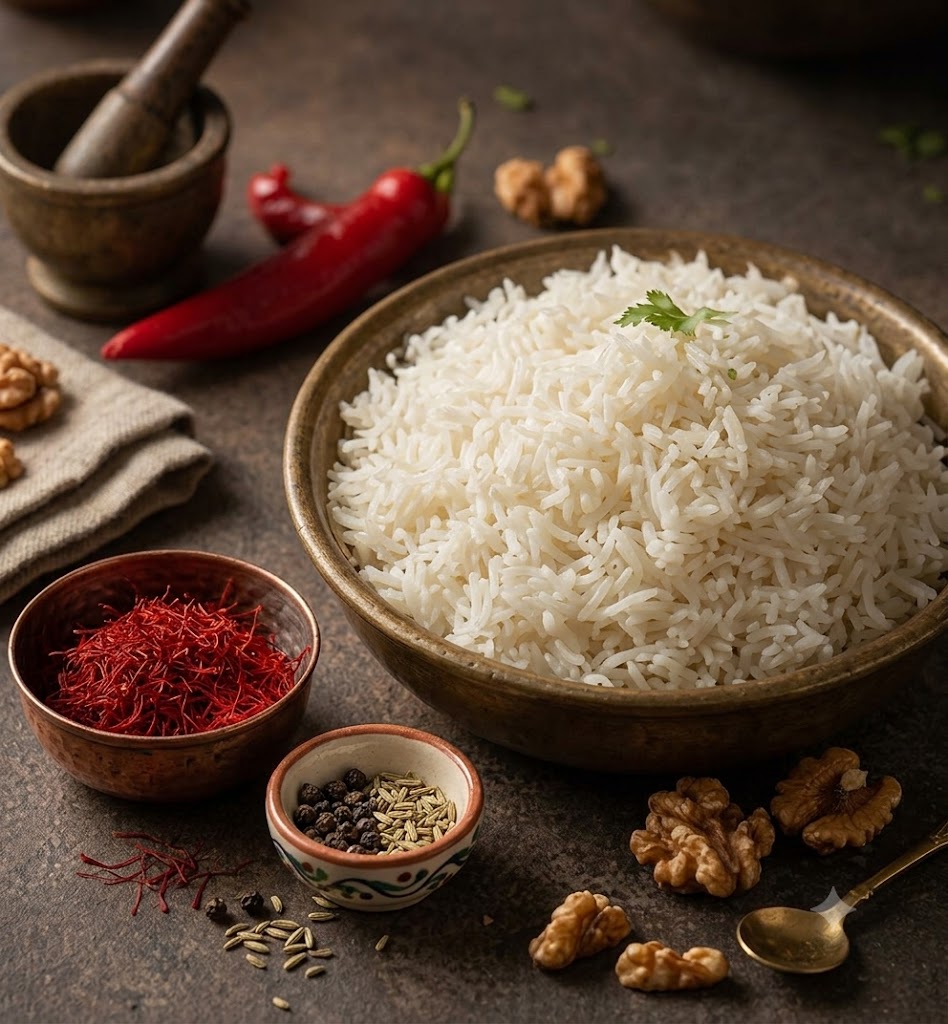
Kashmiri saffron is cultivated in parts of the Kashmir valley, where the climate and soil suit the crop. Cold winters, dry autumns and well-drained fields help the corms, which are the underground bulbs, to grow well. The town of Pampore, near Srinagar, is especially associated with saffron cultivation. Growing areas are small, and this limited supply is one reason the spice is considered rare.
The Spices Board of India publishes information on saffron and other spices at indianspices.com, and Wikipedia’s saffron article gives a general overview of the plant.
How Kashmiri Saffron Is Harvested
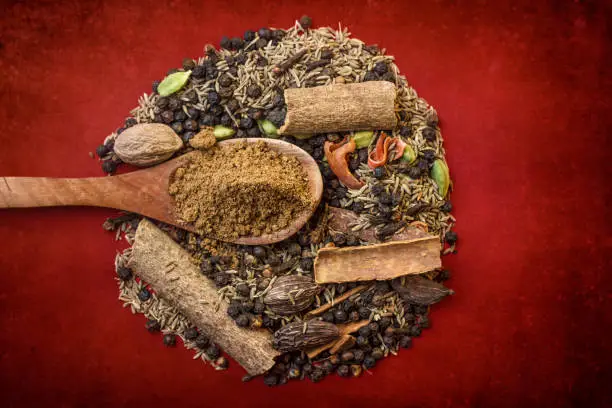
The corms are planted in summer, and the flowers bloom in autumn, usually in October and November. Pickers gather the flowers by hand, often early in the morning, while the petals are still closed. The three red stigmas are then separated from each flower on the same day. Delay can reduce quality, so the work is done quickly and carefully.
After separation, the stigmas are dried gently so that their colour and aroma are retained. This manual process is slow, and it is a major reason why good saffron costs more than most spices. If you want to learn about other spices grown in India, read our guide to Indian spices, their types, uses and regional origins.
Grades of Kashmiri Saffron
Saffron is sold in different grades, and the grade affects both price and performance in cooking. The two terms you will often see are mongra and lacha.
- Mongra: Made of the red stigmas only, with no yellow part. It is generally considered the highest grade.
- Lacha: Strands that include part of the yellow style. These are usually less expensive than mongra.
Neither grade is a guarantee of purity, so check the product and the seller as well as the grade name.
How to Judge the Quality of Saffron
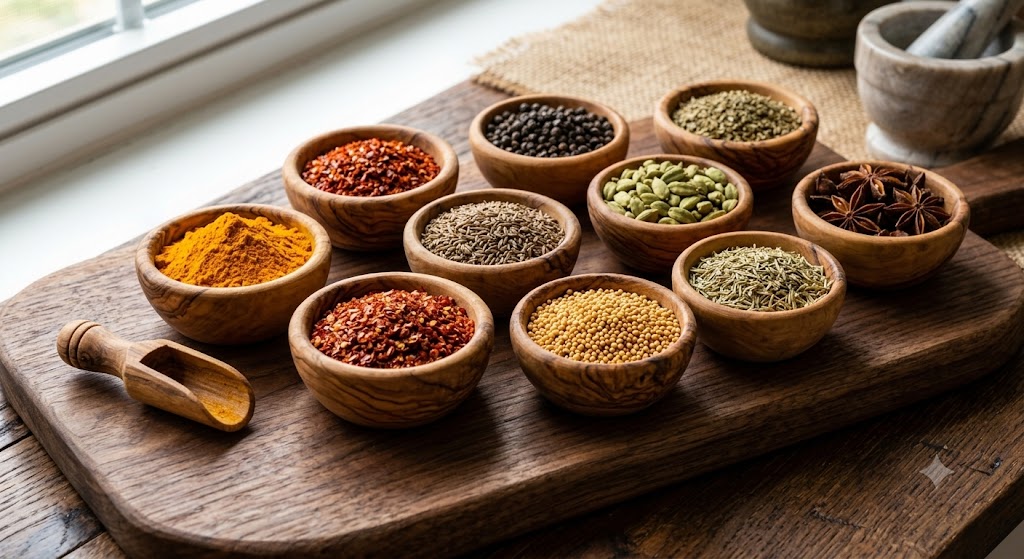
Quality matters more with saffron than with almost any other spice. Genuine threads are deep red with a slightly orange-tinged tip and a strong, distinctive aroma. Powdered or very uniform bright yellow strands can be a sign of dye or adulteration. Kashmiri saffron holds a Geographical Indication (GI) tag, which helps identify its origin, so buying from a reputable seller is important.
Simple Tests You Can Do at Home
- Place a few threads on a white paper. Pure threads leave a red or orange stain, while coloured fakes can leave a bright yellow trace.
- Drop a thread into warm water. Good saffron releases colour slowly over several minutes, instead of staining the water at once.
- Smell the threads. Fresh saffron has a floral, honey-like aroma.
Warning Signs
- Bright yellow or orange threads
- Strands that stain water instantly
- Powder mixed with threads or a price far below the usual market rate
How to Use Kashmiri Saffron in Cooking
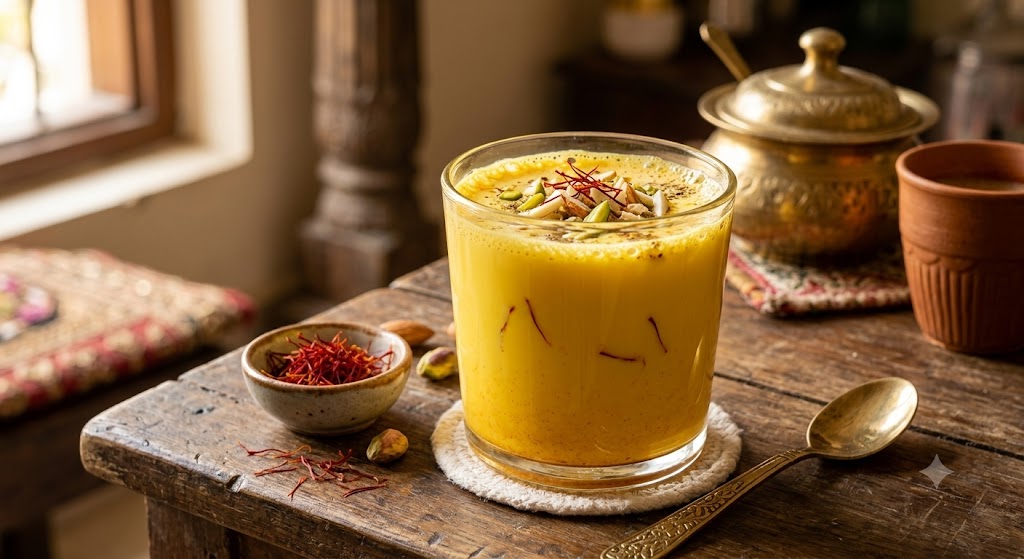
For the best colour and flavour, soak a few threads in warm milk or water for 10 to 15 minutes before adding them to a dish. Crumbling the threads between your fingers helps release more colour. Add the soaked liquid near the end of cooking, because prolonged heat can dull the aroma.
Saffron is used in sweets, rice dishes such as biryani and drinks such as kesar doodh. For a simple sweet drink, try our kesar doodh recipe. Saffron also appears in regional cooking. Our article on famous foods of Kashmir explains the dishes where it features most often.
How to Store Kashmiri Saffron
Saffron is sensitive to light, heat and moisture. Keep it in an airtight, opaque container in a cool, dry place. Avoid opening the container more often than necessary. Our guide on how to store Indian spices has more practical tips that apply to saffron too.
Buying Tips
- Buy from a seller who explains the grade and origin clearly
- Check the product for uniform colour and a fresh aroma when possible
- Choose a pack size you can use within a reasonable time
- Be cautious of very cheap offers, because low prices can signal adulteration
Frequently Asked Questions
Is Kashmiri saffron better than other saffron?
Many buyers prize Kashmiri saffron for its deep colour and aroma, but quality also depends on grade, freshness and storage. Always check the product carefully, whatever its origin.
How much saffron should I use?
A small pinch is usually enough for a dish serving four people. Start with a few threads and adjust to taste.
Why is saffron so expensive?
Each flower yields only three stigmas, the flowers are picked by hand within a short season, and a large amount of flowers is needed for a small amount of dried spice.
How long does saffron last?
Properly stored saffron keeps its aroma for a long time, but it gradually loses colour and flavour. Smell and colour are better guides than a date alone.
Final Thoughts
Kashmiri saffron is valued for its colour, aroma and the careful work needed to produce it. Learn to recognise good quality, use it with care and store it properly, and a small amount goes a long way. To taste dishes made with carefully chosen spices, visit Flavor Heaven.
Pingback: The History of Biryani: Regional Varieties and Culinary Traditions – Flavor Heaven
Pingback: Kesar Doodh Recipe: Saffron Milk at Home | Flavor Heaven
Pingback: Kashmiri Dishes: Famous Foods of Kashmir | Flavor Heaven
Pingback: Indian Spices Guide: Types, Uses and Origins | Flavor Heaven
Pingback: Kashmiri Saffron Marketing: Branding and Sales | Flavor Heaven